Evacuation Lift Upgrade Process: Complete Guide to Compliance, Standards & Safe Solutions
Introduction
Evacuation lifts play a critical role in building safety. They provide safe access and reliable exit routes, especially for vulnerable people, elderly users, or anyone with mobility needs who cannot use stairs during an emergency. Furthermore, industry standards, regulations, and our understanding of fire safety evolve constantly. As a result, you must review, update, and modernise existing lifts regularly. This step ensures systems operate effectively, remain compliant, and deliver the safety performance required today.
Understanding the Evacuation Lift Upgrade Process is essential for every building owner or manager. At Ikonic Lifts, we deliver every stage from assessment to certification. We provide safe, compliant solutions tailored exactly to your building. Contact our specialists today to discuss your requirements.
WHAT IS INVOLVED IN THE EVACUATION LIFT UPGRADE PROCESS?
Your Complete Solution
Based on requirements set out in BS 8899:2016, BS 9999 and EN 81‑76, the Evacuation Lift Upgrade Process follows a clear, structured journey. It brings your system fully up to standard, improves performance, and ensures safety and reliability during emergencies.
Here is exactly what iKONICs complete solution includes:
1. Full Compliance Lift Assessment
To start, we carry out a detailed review of your existing lift installation alongside your building systems and structure. During this assessment, we check:
- Current performance against all relevant standards and regulations
- How the lift interacts with building safety systems such as fire alarms, smoke control and emergency power supplies
- Whether the building provides adequate protection to the lift shaft, machinery spaces and landing areas — as required by BS 9999
- Specific provisions needed to support safe use by vulnerable people or those requiring assistance
2. Technical Upgrades & Modifications
Next, we complete technical works to meet EN 81‑76 and current best practice. These works typically include:
- Control system updates: We install dedicated evacuation operating modes, priority controls and communication systems. These activate automatically in an emergency.
- Safety enhancements: We add or upgrade safety features such as emergency lighting, interlocks, door protection and monitoring systems.
- Power supply improvements: We ensure reliable backup power is in place. This guarantees the lift stays operational during mains failure or emergency situations.
- Communication systems: We fit clear two‑way communication between the lift car, landing points and building control centre or emergency services.
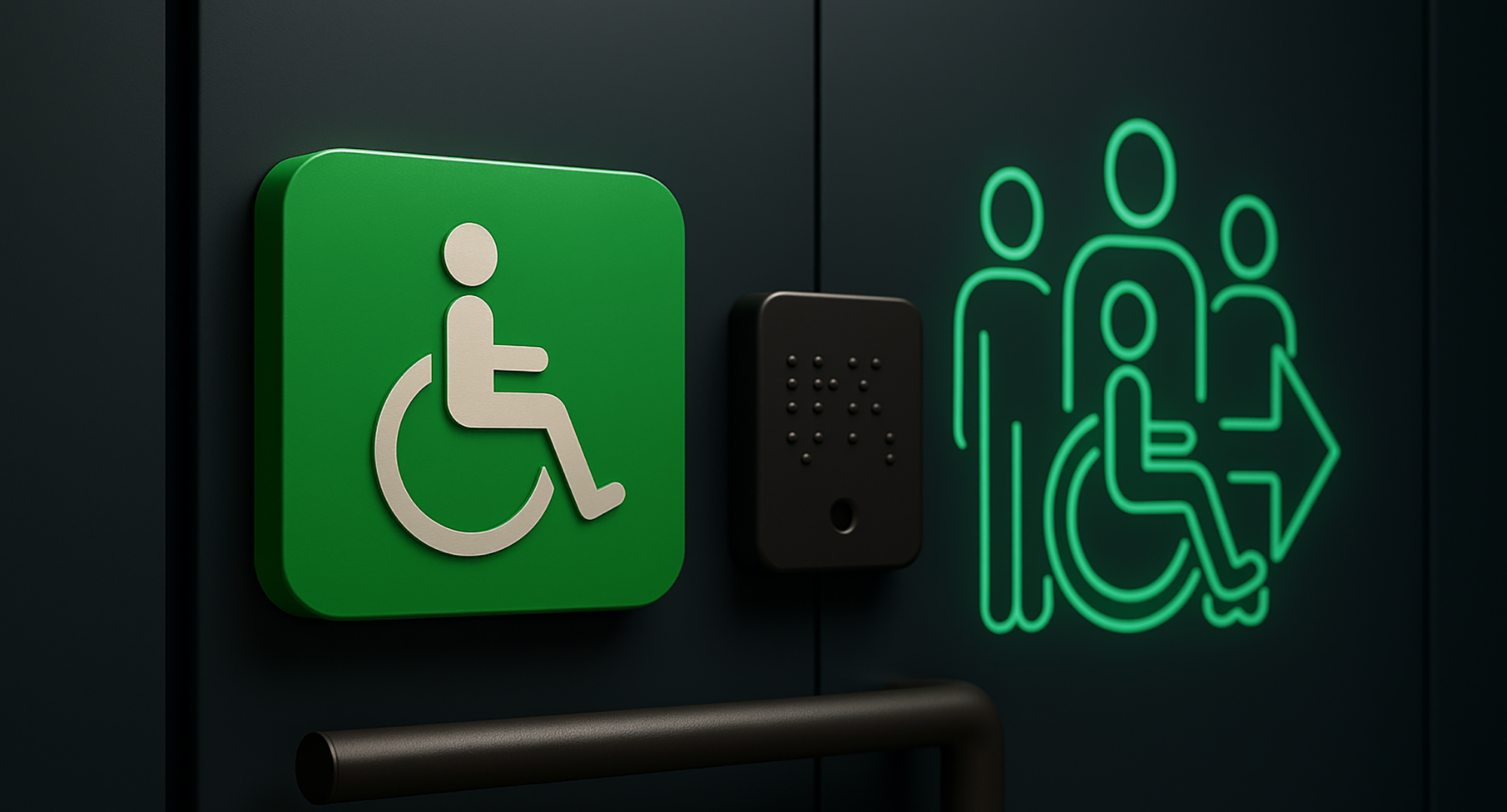
- Signage and guidance: We install clear, compliant signage. This marks the lift as an evacuation lift and provides simple instructions for use.
3. Lift Integration with Building Systems
Furthermore, standards demand the lift works effectively alongside other building safety measures. During this stage, we:
- Ensure the lift responds correctly when fire alarms or emergency signals activate
- Align operations with smoke control and ventilation systems. This maintains safe conditions within the lift shaft and landings.
- Verify that structural protection, fire resistance and compartmentation around the lift meets necessary criteria
4. Lift Accessibility Improvements
In addition, we follow recommendations from the Grenfell Inquiry and rules for inclusive safety. Our upgrades also provide:
- Accessible controls and indicators suitable for all users
- Level access and clear landing spaces
- Features that support safe use by people with disabilities, mobility needs or those requiring assistance
5. Lift Testing, Certification & Maintenance
Finally, we finish the project with thorough validation:
- We carry out full testing and commissioning. This verifies all systems operate correctly and meet every requirement.
- We provide full documentation and certification. This confirms compliance with BS 8899:2016, BS 9999 and EN 81‑76.
- We put ongoing maintenance plans in place. These ensure the lift remains compliant and functional long‑term.
Understanding Current Lift Standards BS 8899:2016
Firstly, clear guidance for improving and maintaining evacuation lifts appears in BS 8899:2016. This document acts as the dedicated Code of Practice. It covers improvements to firefighting and evacuation provisions within existing lifts.
The core definition and requirements for a fully functional evacuation lift have remained broadly consistent since 1988. Back then, experts introduced these rules in BS 5588‑8. Today, BS 9999 sets the key criteria a lift must meet. For example, it explains how the lift interfaces with overall building design, fire strategy, and safety systems. This standard defines exactly what makes a lift compliant and fit‑for‑purpose during evacuation. In addition, BS 8899 provides clear, step‑by‑step guidance. It shows how to bring older or existing installations up to this required standard.
When you follow the Evacuation Lift Upgrade Process strictly, you guarantee safety, legal compliance, and reliable long‑term performance. We always adhere closely to these standards during every project.
What is Driving Change and Evacuation Lift Upgrades?
Three key factors drive increased demand for upgrades across the UK:
1. New industry benchmarks – Recently, experts introduced EN 81‑76. This standard sets a new, advanced international benchmark for evacuation lifts. Therefore, it represents a significant step forward in safety, reliability, and functionality compared to older British Standards. It sets a higher bar for design, installation, and long‑term performance.
2. Recommendations from official inquiries – Secondly, findings from Phase 2 of the Grenfell Inquiry (published 2024) placed strong focus on safety and accessibility. The report highlighted the specific needs of vulnerable people. Importantly, these recommendations now shape how teams design, install, and maintain evacuation systems. They make clear that safe escape provision for everyone must form part of every building safety strategy.
3. Improving access for all – Finally, legal and ethical duties demand safe evacuation arrangements for every building user. This includes people with disabilities or mobility impairments. For this reason, modernising existing lifts offers a practical, cost‑effective solution — provided the building structure, shaft, and systems offer adequate fire protection. This approach improves evacuation capability and meets essential obligations.