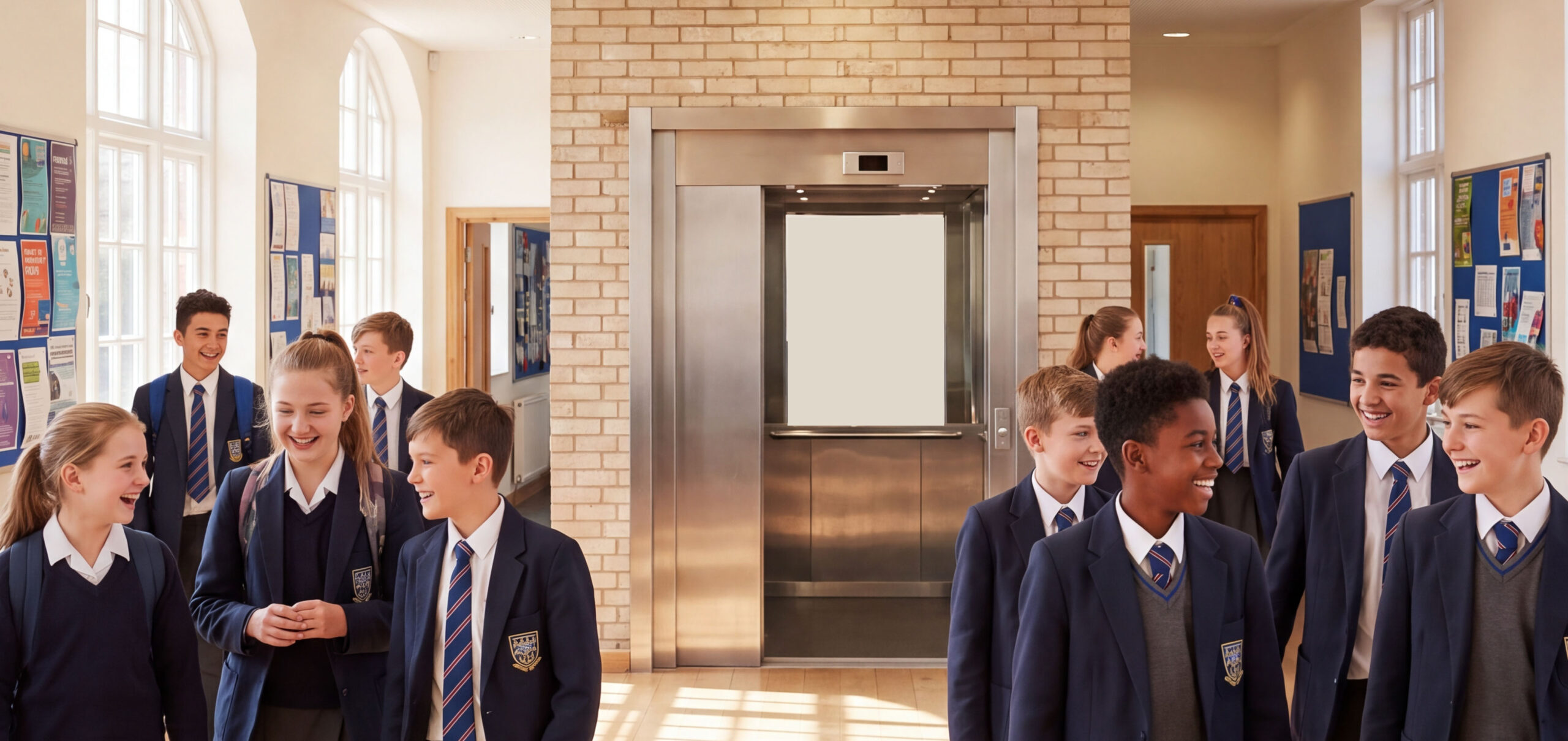
Specifying New Lifts For Education Buildings
The Best Advice iKONIC Can Give: Start With the Right Lift Type
When you choose a lift for a school, college or university, you are not just buying equipment. You are making a decision that will affect compliance, budgets, accessibility and safety for the next 20 years or more.
At iKONIC Lifts, we see the same mistake repeated across the education sector. A platform lift is selected to save space or budget at the design stage. Years later, it cannot meet new fire rules, cannot serve as an evacuation lift and falls short of accessibility standards. The result. A costly replacement before the lift has reached the end of its life.
Our advice is simple. Always start with a passenger lift. Specify it correctly from day one, and you meet every rule, every standard and are more likely to modernise to future changes more economically.
Why Always Choose A Passenger Lift First
Approved Document M sets out a strict hierarchy. A passenger lift is always the first and preferred choice. Platform lifts and stairlifts are only permitted if you can prove a passenger lift will not fit.
By choosing a passenger lift first, you:
- Meet Part M without needing to justify or document exceptions
- Deliver the best possible accessibility for all users
- Gain a lift that can also serve as a firefighter’s lift or evacuation lift under Part B
- Avoid being locked into older technology that cannot be upgraded
- Future‑proof against changing standards, including September 2026 deadlines
- Maintain maximum flexibility for how the building is used
A passenger lift specified correctly is not just a lift. It is a compliant, accessible, evacuation‑ready asset that satisfies every regulation in one installation.
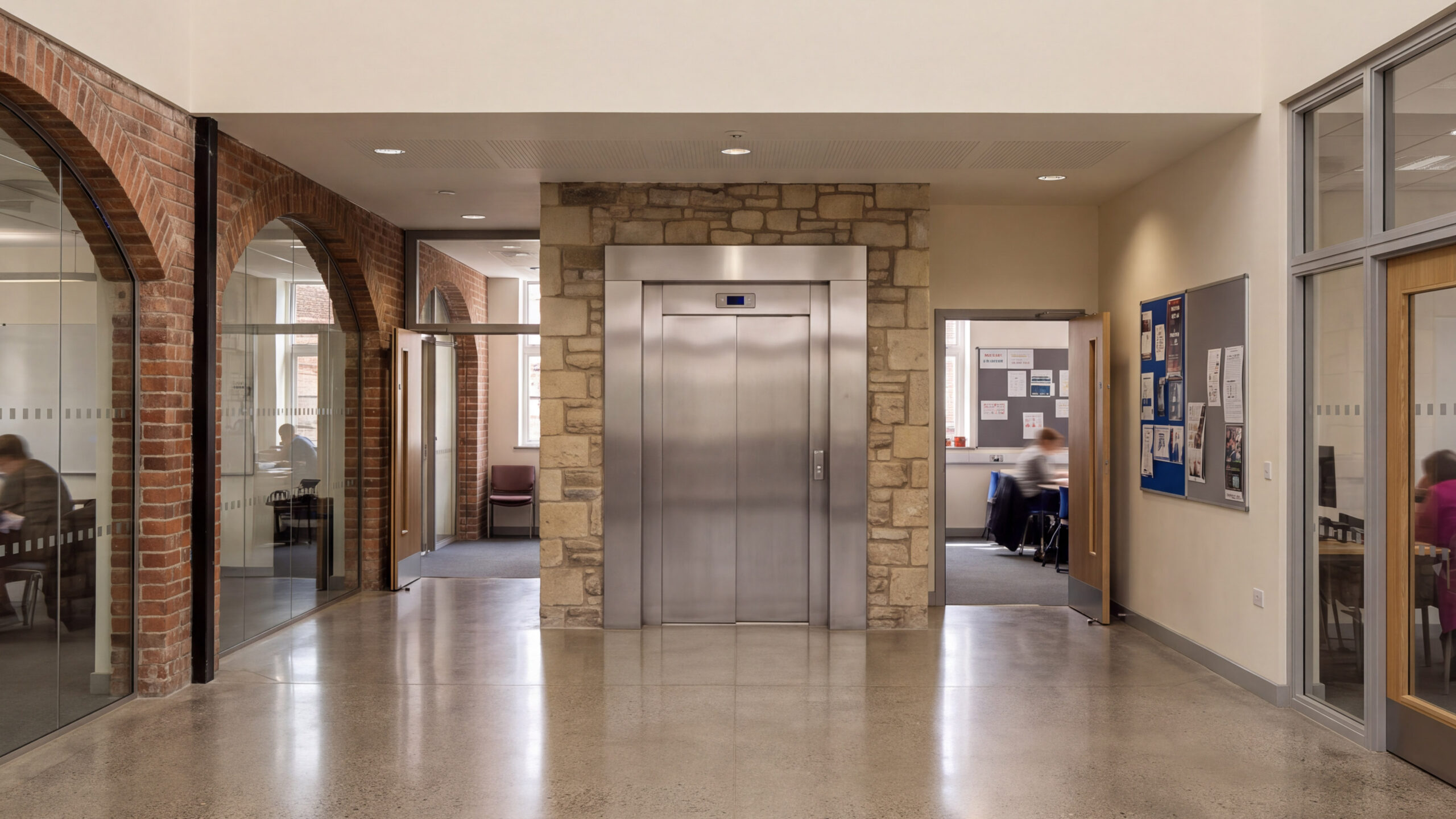
Recommended Lift Specification for Education Buildings
If you are installing a new lift in an education building, this is the specification we advise you to use. It satisfies Approved Document M and Approved Document B of the Equality Act 2010, and all upcoming standards in one go.
Minimum Standard: Passenger Lift to BS EN 81‑70 Type 2
This is your baseline. Every lift should meet:
✅ BS EN 81‑70 Type 2 — the recognised accessibility standard.
✅ Minimum internal car size: 1100 mm wide × 1400 mm deep.
✅ Clear door opening: 800 mm minimum width.
✅ Controls mounted between 900 mm and 1200 mm above floor level.
✅ Tactile and audible feedback on all buttons.
✅ 1500 mm × 1500 mm clear landing space at every level.
✅ Doors remain open for at least five seconds before closing.
This specification ensures the lift serves everyone reliably. Wheelchair users, people with visual impairments, those with cognitive needs and assisted users all benefit equally. It also means the lift meets Part M without argument.
Future-Proof Standard: Add BS EN 81‑76 Evacuation Capability
From September 2026, new tall residential education buildings will require evacuation lifts. Even if your project is not yet legally required to have one, we recommend you specify it anyway.
BS EN 81‑76 is the new standard covering how lifts operate during emergencies to assist evacuation. When included in your passenger lift specification, you get:
- Fully certified evacuation sequences built in from day one.
- Compatibility with BS 9991 and Approved Document B requirements.
- Hands-free two-way emergency communication.
- Full integration with fire alarm and refuge point systems.
- One single lift that serves daily accessibility and emergency evacuation.
- Compliance-ready long before deadlines arrive.
Why This Lift Specification Is The Smart Choice
For Educational Buildings New Lifts
Benefit | Passenger Lift | Platform Lift | Passenger Lift Type 2 BS EN 81‑70, BS EN 81‑76 |
| Meets Approved Document M hierarchy? | Varies | Requires proof | ✅ |
| Accessibility for all users? | Varies | Limited | ✅ |
| Can serve as Evacuation Lift? | Maybe | No | ✅ |
| Meets Part B fire standards | Varies | No | ✅ |
| Upgradeable in future | Varies | No | ✅ |
| Complies post September 2026 | Uncertain | No | ✅ |
What Could Happen If You Choose a Platform Lift Instead of a Passenger Lift
If you select a platform lift instead of a passenger lift, you accept significant limitations:
- You must document and prove why a passenger lift could not fit every time.
- It cannot be used as an evacuation lift under Approved Document B.
- It will not meet BS EN 81‑76, so you may face replacement sooner.
- Resale or alteration of the building becomes harder.
- Compliance records are permanently more complex to maintain.
- You lock yourself into a solution that cannot grow with the building.
A platform lift is the right answer in the right place. But it should never be your starting choice.
iKONIC Lift Recommendation for Educational Buildings in One Sentence
Specify a passenger lift to BS EN 81‑70 Type 2 as your minimum standard. Add BS EN 81‑76 evacuation capability wherever possible.
This is the single best piece of advice we can offer. It means one lift does the job of three. It meets every rule. It satisfies every inspector. And it remains compliant for 20 years or more.